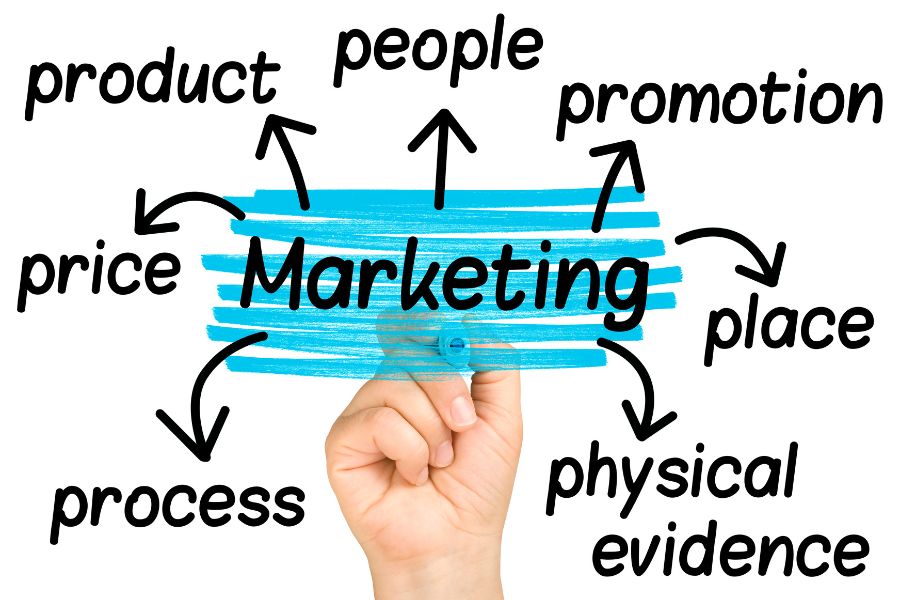
The 4 P’s framework is commonly used in business planning and marketing strategy to ensure a business understands how it will position itself in the market. The 4 P’s are:
- Product
- Price
- Place
- Promotion
These elements help define what you’re selling, who you’re selling to, how customers can access it, and how you’ll convince them to buy.
1. Product, What You’re Selling
This includes:
- What is the product or service?
- What problem does it solve?
- What makes it unique?
- What value does it deliver?
- What features or benefits matter most to customers?
Examples:
- A bookkeeping service offering monthly financial organization
- An eco-friendly cleaning product
- An online coaching program
At its core, the product must solve a real need not just exist for the sake of selling.
2. Price, What You Charge
Pricing influences profitability, positioning, and perceived quality.
When determining price, consider:
- market price range
- competitor pricing
- cost of production or service
- perceived value
- customer affordability
- profit margin expectations
Different price strategies include:
- penetration pricing (starting low to gain market share)
- premium pricing (charging high due to strong perceived value)
- subscription pricing
- freemium model
- cost-plus pricing
Price tells customers how to interpret your value.
3. Place, Where and How You Sell
Place refers to distribution and access:
- Where is the customer buying from?
- Is it online or physical?
- Are you selling through a website?
- Retail store?
- Amazon or other marketplaces?
- Direct-to-customer or wholesale?
For services “place” may mean:
- remote delivery
- in-person service
- on-site client support
- virtual platforms
Place matters because convenience strongly impacts sales conversions.
4. Promotion, How You Create Demand
Promotion is how you communicate value and attract customers.
This may include:
- social media marketing
- paid advertising
- Google SEO
- influencer partnerships
- email marketing
- print advertising
- networking & events
- referral programs
- PR & media features
- content marketing
Promotion answers the question:
- How will customers discover this business?
Even the best product fails without visibility.
Why the 4 P’s Matter
The 4 P’s unify strategic decisions:
- Product defines what you sell
- Price defines how you earn
- Place defines how customers access it
- Promotion defines how customers hear about it
Together, they create a framework that ensures the business has a market-ready offering.
Example of the 4 P’s in practice
Example: Home cleaning business
- Product: Professional home cleaning
- Price: Subscription packages from $120–$300/month
- Place: Local service area, booked online
- Promotion: Facebook ads + Google Reviews + neighborhood flyers
Example: Online fitness program
- Product: virtual coaching plan
- Price: $49/month subscription
- Place: online delivery
- Promotion: Instagram content + email marketing + testimonials
The clarity makes business decisions easier.
How Ingenious Professional Consultants Helps
At Ingenious Professional Consultants, we help founders:
- define the right product offering
- select effective pricing strategy
- choose the best distribution model
- build promotional strategies tied to real ROI
We don’t just create business plans we create business clarity.
Conclusion
The 4 P’s of a business plan Product, Price, Place, and Promotion provide a concise way to build a competitive and customer-focused business model. When these elements are aligned, the business has a strong foundation for sustainable growth.
FAQ
Yes, it is foundational to marketing and business planning.
All four must align, but product and price are often the core drivers.
Yes, place becomes the platform or selling environment.
Absolutely, businesses must adapt promotions, pricing, and offerings over time.
They are a strong foundation, but additional financial and operational planning is still recommended.